Choosing windows is not simply about picking a frame colour or deciding between sliding and casement windows. The right window needs to work with your architecture, room size, ventilation requirements, natural light, noise levels, climate, and everyday usage.
This is where uPVC windows offer flexibility. Modern systems are available in multiple configurations, including sliding, casement, fixed, French, arch, vertical sliding, and glass-to-glass designs. The right combination of uPVC window profiles, glazing, frame configuration, and opening style can make a noticeable difference to both the appearance and performance of a space.
For homeowners, architects, and builders in Mumbai and Navi Mumbai, window selection also needs to account for humidity, heavy monsoons, urban dust, traffic noise, and limited maintenance requirements.
Why Architecture Should Guide Your Window Choice
A window should look like part of the building rather than an element added afterwards.
For example, a large contemporary living room may benefit from expansive glazing and minimal visual divisions, while a compact bedroom may require a more practical opening configuration for ventilation and privacy.
Before selecting a window, consider:
- Architectural style: Contemporary, traditional, minimalist, or classical
- Available wall space: Width and height of the opening
- Ventilation: How much airflow the room needs
- Natural light: Whether the room requires larger glass areas
- Noise exposure: Traffic, construction, railway lines, or commercial activity
- Weather exposure: Rain, humidity, dust, and sunlight
- Maintenance: How frequently the window can realistically be cleaned and maintained
- Security: Locking mechanisms and frame strength
A well-planned window specification balances all of these factors instead of focusing on appearance alone.
Understanding Different uPVC Window Styles
Different opening styles serve different architectural purposes. Ramkrishna uPVC manufactures several configurations, including sliding, casement, fixed, French, arch, Georgian bar, and vertical sliding windows.
1. uPVC Sliding Windows
Sliding windows move horizontally along a track and are particularly useful where projecting shutters would interfere with furniture, walkways, balconies, or other exterior elements.
They work well for:
- Apartments and high-rise homes
- Bedrooms
- Balconies
- Compact rooms
- Wider wall openings
For urban homes, properly sealed sliding systems can also contribute to improved noise and dust control.
2. uPVC Casement Windows
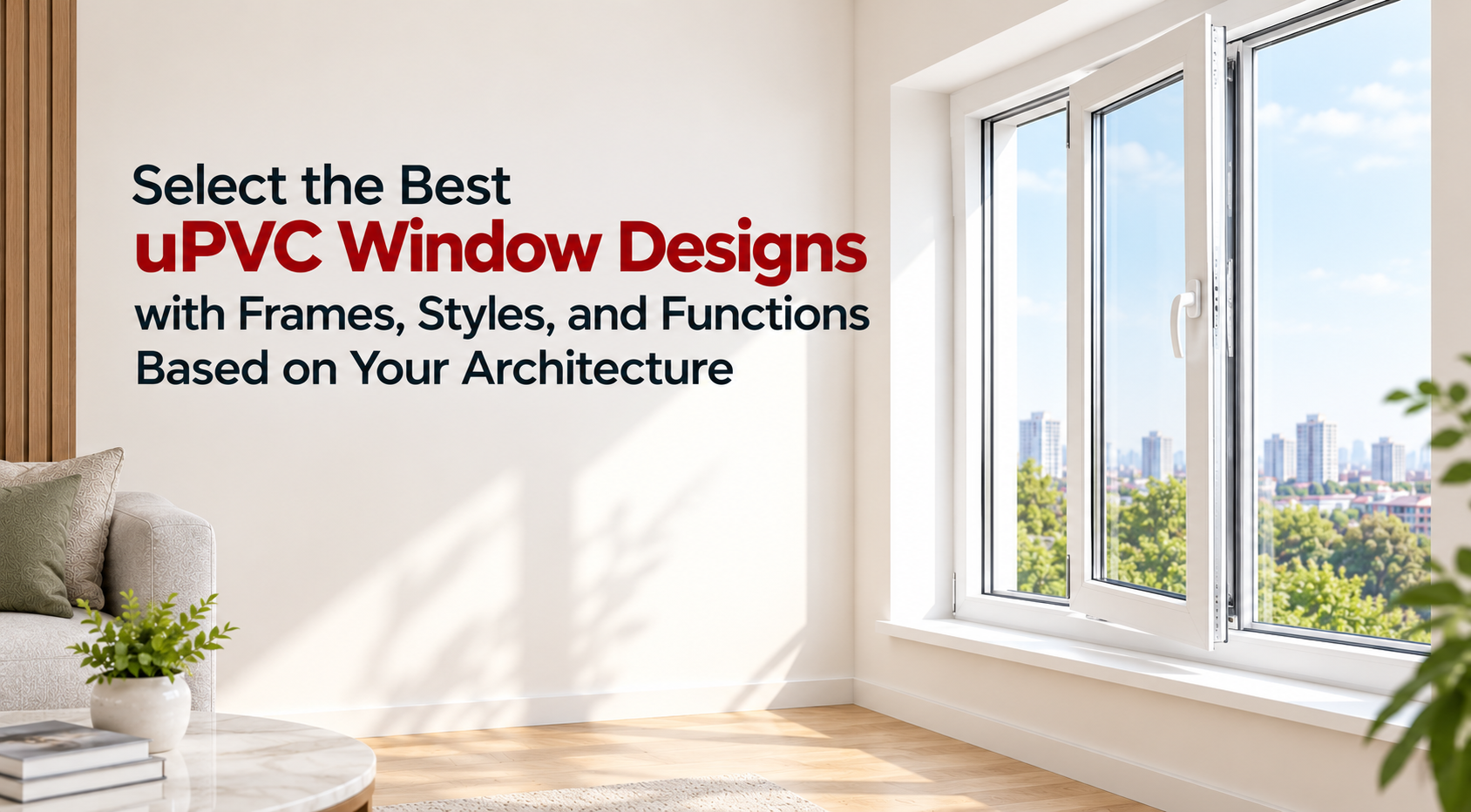
Casement windows open outward using hinges and can provide a wide opening for ventilation.
They are suitable for:
- Bedrooms
- Living rooms
- Kitchens
- Villas
- Spaces where ventilation is a priority
Their closing mechanism can create a tight seal around the frame, which is particularly useful when noise insulation and air-tightness are important.
3. Fixed uPVC Windows
Fixed windows do not open. Their primary purpose is to bring in natural light and provide an unobstructed view.
They can be used in:
- Staircases
- Living rooms
- Large architectural openings
- Feature walls
- Areas combined with operable windows
Fixed glazing can also be combined with other window configurations to create larger compositions.
4. uPVC French Windows
French-style windows can add a more traditional or elegant character to a façade while providing ventilation and natural light.
They are particularly suitable for villas, larger residences, and architectural designs where the window itself is intended to become a visual feature.
5. uPVC Arch Windows
Arch windows are useful when the architecture includes curved or decorative elements.
Rather than forcing a rectangular window into an unusual opening, an arch configuration can follow the architectural form and create a more cohesive appearance.
6. Vertical Sliding Windows
Vertical sliding windows open upward and downward rather than sideways.
They can be considered for traditional-inspired architecture, compact openings, and spaces where the horizontal area available for a window is limited.
How to Choose the Right uPVC Window Profiles
The uPVC window profile is more than the visible frame. It forms the structural framework that holds the glazing, hardware, seals, and other components together.
A suitable profile should be selected according to the window’s:
- Size
- Opening configuration
- Glazing specification
- Structural requirements
- Location
- Expected usage
- Acoustic and thermal requirements
Ramkrishna uPVC states that its window systems use reinforced profiles and undergo quality checks for strength, fit, and finish. Its manufacturing setup is also designed for precision cutting, welding, and assembly.
This matters because even an attractive window design needs a correctly specified frame to perform reliably over time.
When Should You Consider uPVC Soundproof Windows?
For homes facing busy roads, construction activity, commercial areas, or other persistent sources of external noise, acoustic performance should become part of the window specification from the beginning.
uPVC Soundproof Windows are not defined by the frame material alone. The overall performance depends on the combination of frame, glass, seals, opening configuration, and installation quality.
Research on window acoustics shows that glazing configuration, glass thickness, lamination, air-space depth, and other window-design factors can influence sound insulation.
What Makes a Window Better for Noise Reduction?
Consider these components together:
- Glazing: Double glazing or acoustic/laminated glass can provide better sound insulation than basic single glazing, depending on the specification.
- Frame: A properly designed multi-chamber uPVC profile can support acoustic performance.
- Seals: Gaps around the sash or frame can create paths for airborne sound.
- Opening style: A well-sealed opening configuration can be preferable where acoustic performance is a major requirement.
- Installation: Even a high-performing window can lose effectiveness if the perimeter between the frame and wall is poorly sealed.
The important point is that there is no single “soundproof” specification suitable for every property. A bedroom beside a busy road may require a different glass and frame combination from a living room overlooking a quiet internal courtyard.
Choosing Soundproof Windows in Navi Mumbai
For homeowners looking for soundproof windows in Navi Mumbai, the first step should be identifying the actual noise source.
Think about whether the room faces:
- A busy main road
- A railway line
- A construction site
- A commercial area
- A school or public gathering space
- A quieter internal garden or residential lane
You should then discuss the required glazing and frame configuration with the manufacturer rather than choosing a window based solely on a generic “soundproof” label.
The same principle applies to Mumbai apartments, villas, offices, and commercial properties where acoustic comfort is important.
Why uPVC Modern Windows Work Well With Contemporary Architecture
uPVC modern windows can complement contemporary architecture because they can be configured around different opening sizes, glazing requirements, and design preferences.
Clean frame lines can work particularly well with:
- Minimalist façades
- High-rise apartments
- Modern villas
- Renovated homes
- Contemporary offices
- Large glazed living spaces
The design should, however, remain practical. A very large glass opening may look impressive, but its frame, glazing, hardware, structural requirements, solar exposure, and installation need to be evaluated before manufacturing.
Don’t Ignore Measurement and Installation
Window selection does not end with choosing a design.
Accurate measurement is critical because gaps or incorrect dimensions can affect air-tightness, water resistance, operation, and insulation performance. This is especially relevant in Mumbai and Navi Mumbai, where heavy rainfall and humidity can expose weaknesses around poorly detailed openings.
Before finalising your order, confirm:
- Opening dimensions
- Frame configuration
- Glass specification
- Hardware and locking system
- Drainage requirements
- Frame-to-wall sealing
- Installation method
- Final finishing and alignment
A carefully manufactured window still needs careful installation to deliver the intended performance.
A Simple Checklist Before You Finalise Your Windows
Before placing an order, ask yourself:
- What is the main purpose of the window?
Light, ventilation, view, noise reduction, or a combination? - What is the architectural style?
Choose a configuration that complements the building rather than working against it. - How much external noise reaches the room?
If noise is a concern, discuss glazing and sealing options before selecting the final design. - Which uPVC profile is appropriate?
The profile should be compatible with the opening size, glass, hardware, and performance requirements. - How will the window be installed?
Ask about measurement, frame fixing, perimeter sealing, drainage, and finishing. - What maintenance will be required?
uPVC is generally designed for low maintenance and does not require routine painting or polishing.
Choose Windows That Work With Your Building
The best window is not necessarily the most expensive or the most elaborate design. It is the one that fits the architecture, room function, climate, noise conditions, glazing requirements, and everyday needs of the property.
From sliding and casement systems to fixed, arch, French, vertical sliding, and glass-to-glass configurations, uPVC provides the flexibility to create practical and visually consistent window solutions. When noise is a concern, selecting the right combination of uPVC profiles, glazing, seals, and installation becomes equally important.